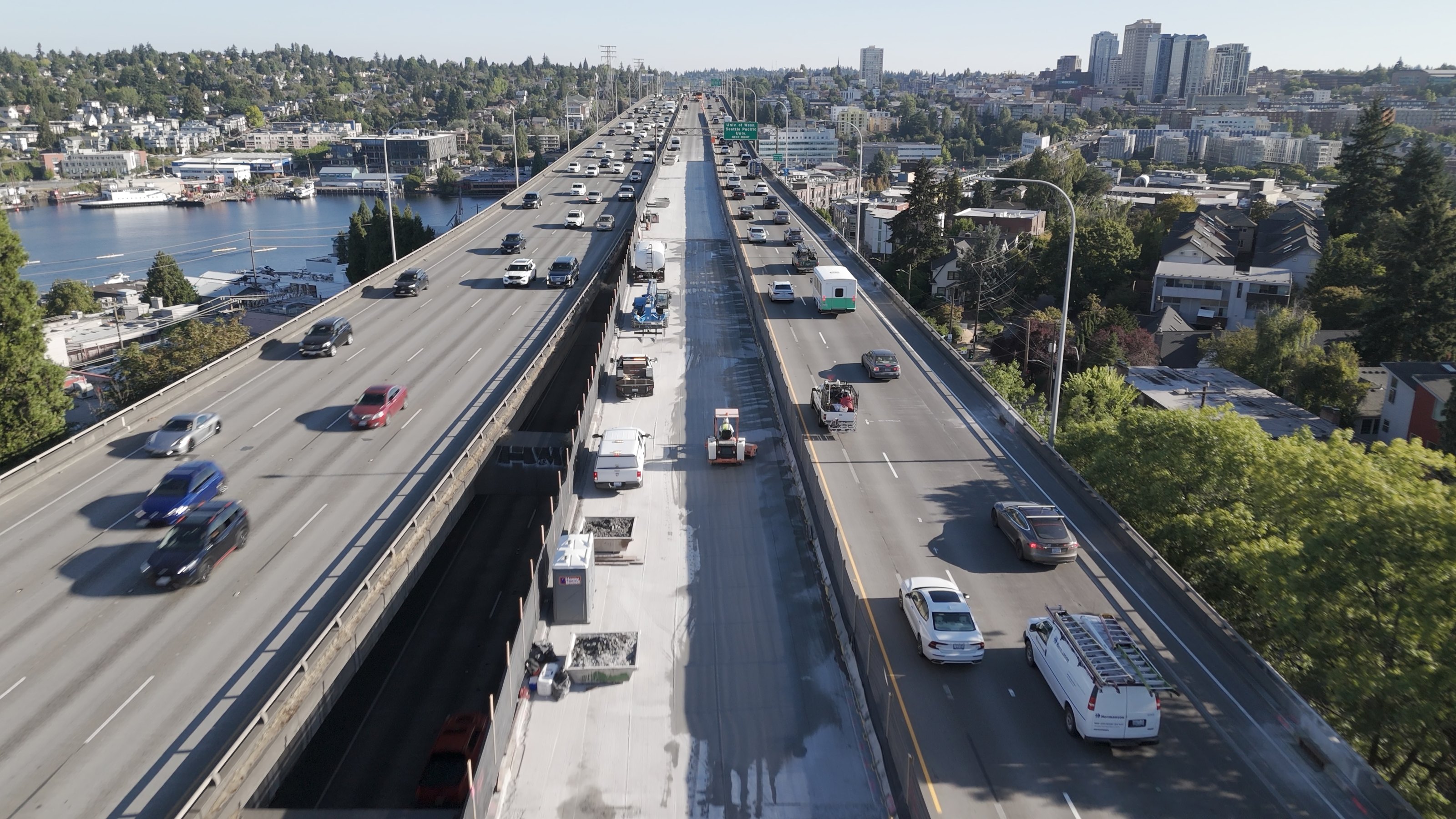
Expanding access, measuring impact: fare-free transit and well-being
King County Metro

King County Metro hired PRR to gather data to answer the question: Does fare-free public transit improve the health and well-being of people with low incomes?
Nearly 1,900
5 languages
Over 80%
The Situation
Understanding the impact of fully-subsidized transit
People with low incomes often faced significant transportation barriers that limited access to jobs, services, and social connections, factors closely tied to health and well-being. Reduced transit fare programs aimed to remove these barriers, but data on their broader impact, beyond mode choice and travel behavior, remained limited.
The Opportunity
Rigorous, inclusive research to inform transit fare programs
Working within a randomized controlled trial (RCT) design, PRR led recruitment for a longitudinal, mixed-methods study. PRR surveyed nearly 1,900 participants with very low or no incomes up to four times over two years, providing materials in English, simplified and traditional Chinese, Somali, Spanish, and Vietnamese via online, call-in phone, and paper methods. PRR also complemented the RCT with a companion qualitative phase to understand the stories behind average treatment effects, and developed data management tools to process large datasets, including 30,000+ agency customer records, while tracking repeated measures and compensation for survey respondents.
Results
Evidence to guide future transit policy
The study successfully engaged and retained a large, diverse cohort of low-income participants, producing high-quality longitudinal data on transit use and well-being. Response rates surpassed 80% at baseline and one-year follow-up and remained high during intervening survey waves. The research results would directly inform decisions by Metro and other regional transit agencies regarding renewal and expansion of Fare Free Public Transit. Metro's dissemination plan leveraged existing connections of the project team to bring this evidence into the national conversation on the impacts of transit affordability.