
Turning awareness into action for large-scale lead line replacement
DC Water

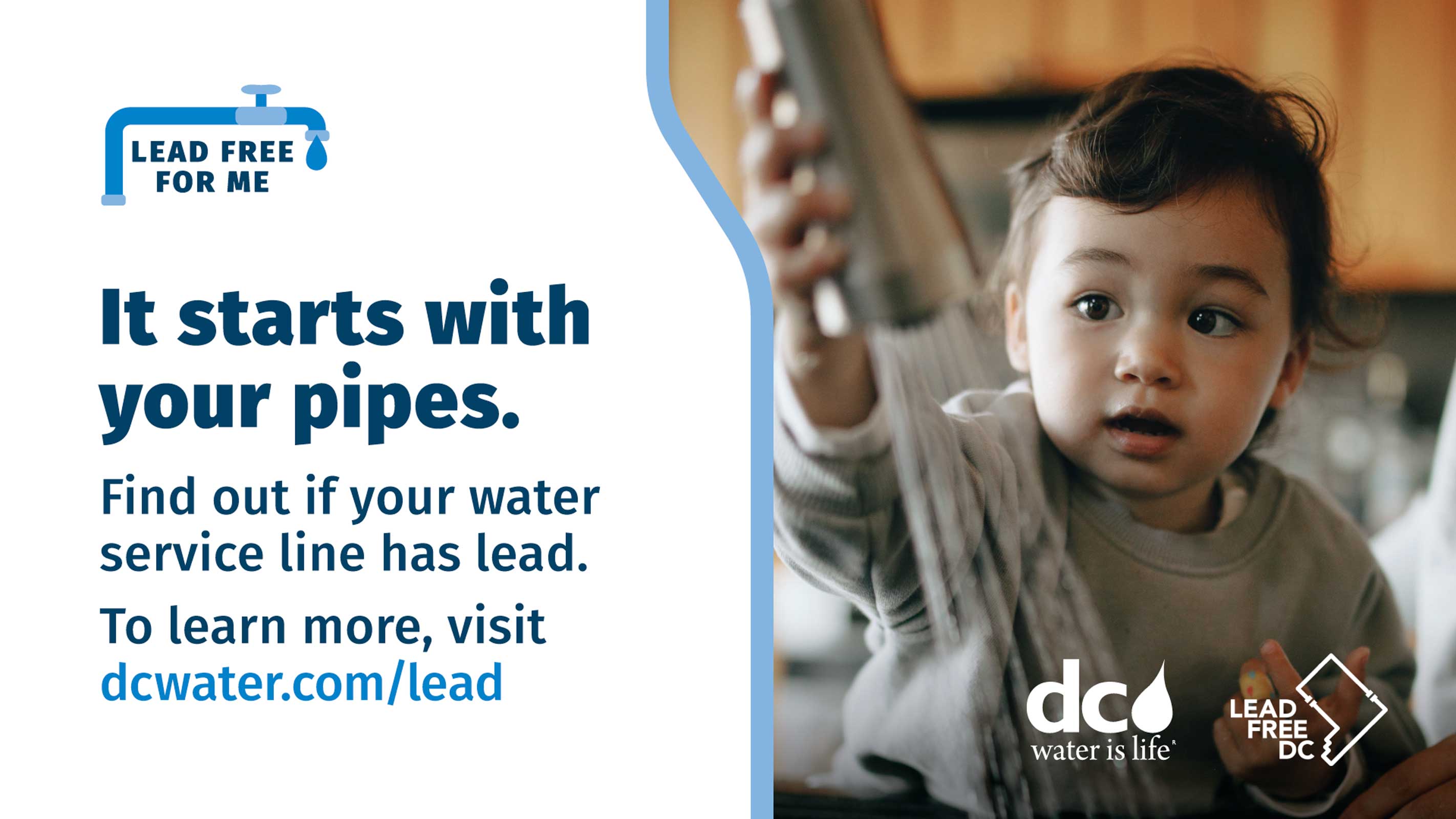
PRR supports DC Water’s Lead Free DC program with strategic communications and community engagement to drive participation in lead service line replacement. Using a behavior-centered approach to simplify complex processes and build public trust, PRR aligns communications across partners to increase awareness, engagement, and measurable customer action at scale.
215%
3x
9,000
The Situation
Overcoming trust barriers and complexity in lead service line replacement
Washington, DC, is working to replace thousands of aging lead service lines, many of which are undocumented or difficult to verify. At the same time, they are encouraging residents to voluntarily participate in the process. Participation requires navigating multiple steps, often in the context of lingering public skepticism and limited understanding of what replacement involves.
As the program increased the estimated service lines to be replaced to nearly 42,000, the challenge became not just technical, but behavioral. DC Water needed to increase awareness, build confidence, and support residents through a complex decision-making process. Without clear guidance, residents were more likely to delay or opt out of a process that required time, effort, and trust.
The Opportunity
Designing a system to drive participation at scale
PRR approached the program as an opportunity to design a scalable communications system that drives measurable participation. By integrating marketing, research, creative, and engagement efforts under a unified behavior change framework, PRR helped align multiple partners around a shared strategy.
The coordinated approach improved clarity across the customer journey and strengthened the connection between outreach efforts and participation outcomes.
The Solution
Aligning communications to drive resident participation
PRR unified outreach, marketing, and research under a behavior-centered strategy to reduce barriers, build trust, and support participation in lead service line replacement.
Define behavior pathways
Align partner communications
Develop clear, actionable messaging
Target outreach using data
Reinforce awareness through campaigns
Results
Strengthening engagement and participation across the Lead Free DC program
PRR’s strategy improved how residents understood and engaged with the Lead Free DC program, helping move more people from awareness to action. Campaign efforts increased website traffic and strengthened recognition, while clearer messaging reduced barriers during direct outreach.
Digital engagement increased significantly during campaign periods, including higher traffic to the website and key tools like the inventory map. This contributed to exceeding fiscal year 2025 Right of Entry sign-up goals by 215%. As a result, the program gained stronger momentum, with communications supporting both individual participation and the ability to scale replacement efforts across the District.